Bone Adaptation & Remodelling
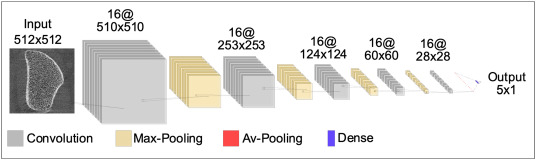
Deep learning for motion grading ↗
Using convolutional neural networks to support motion-quality assessment in high-resolution bone imaging.
Published research
RESEARCH
Mapping local bone formation and resorption over time, and relating these changes to the mechanical environment.
Longitudinal HR-pQCT and micro-CT let us study where bone forms and is resorbed. Combining these images with finite element models helps us examine the relationship between mechanical conditions and local tissue change.
This is the foundation of our mechanobiology work, with studies of mechanoregulation, diabetes, and recovery after spaceflight. It also underpins our open tools for registration, remodelling analysis, motion grading, and simulation.
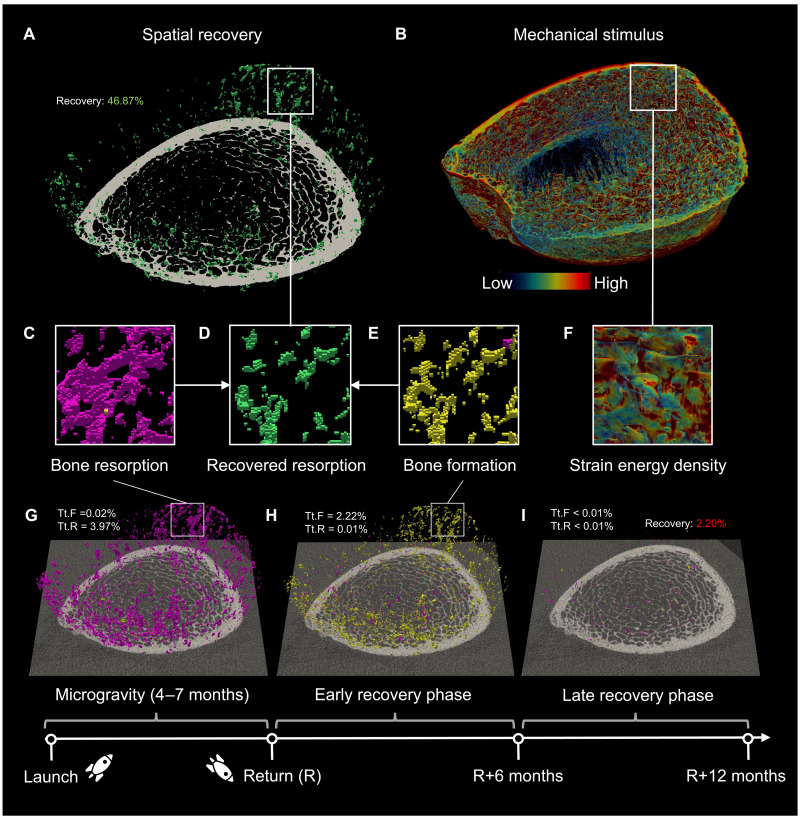
See our mechanoregulation study and spaceflight remodelling study.
Bone Adaptation & Remodelling
Using convolutional neural networks to support motion-quality assessment in high-resolution bone imaging.
Bone Adaptation & Remodelling
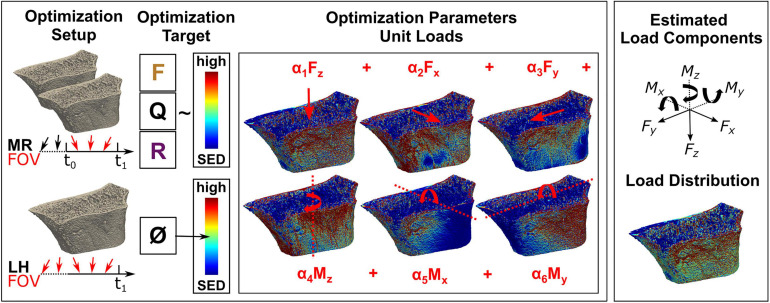
Using local tissue change and finite element models to estimate subject-specific loading in vivo.
Bone Adaptation & Remodelling
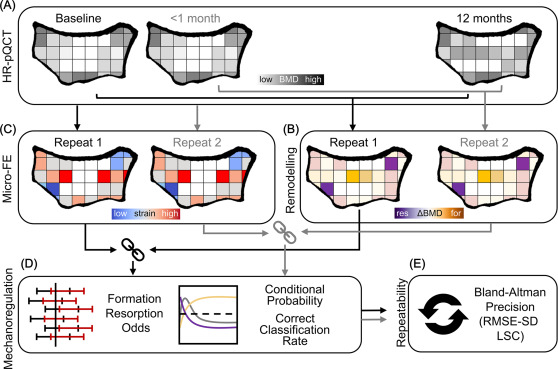
Establishing how reliably imaging and simulations can relate local formation and resorption to mechanical stimulus.
Bone Adaptation & Remodelling
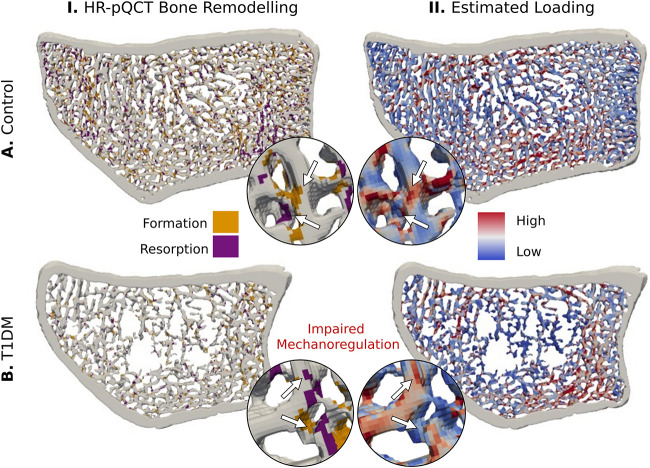
Investigating whether bone remodelling and responsiveness to mechanical stimuli differ in type 1 diabetes.
Bone Adaptation & Remodelling
Tracking bone loss and recovery in astronauts, through a Calgary-led programme with NASA collaborators.